About NEXCUBE

From curiosity to real engineering.

NEXCUBE was created to make practical STEM and engineering learning easier, safer, more portable, and more expandable.

Our story

Not just a toolkit. A bridge from learning to building.

Students often have the passion to build, but the practical environment around them is fragmented. Tools are bought separately, wires become messy, setup takes time, and beginners do not always know where to start.

NEXCUBE addresses this gap by combining essential lab functions into a modular cube-based ecosystem. The user can begin with a small setup, then add modules as projects become more advanced.
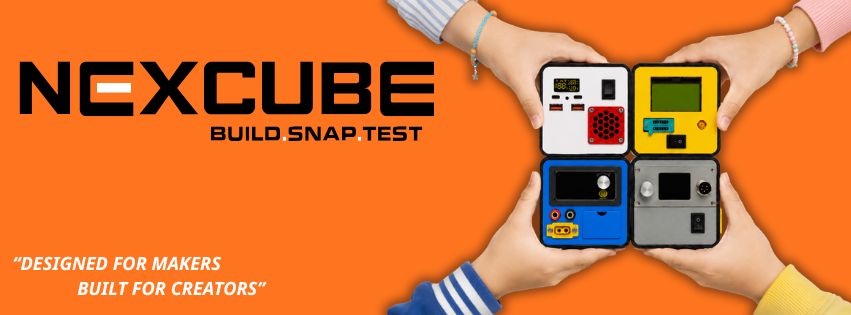
NEXCUBE product cover
Mission

Make engineering practice less intimidating.

The system focuses on four practical values: ease of use, affordable access, guided learning, and portability.

E

Easy to use

Clear labels, fewer cables, and a simpler setup workflow.

A

Accessible

Designed for students and early makers instead of only professional labs.

G

Guided

Project Hub connects hardware with tutorials, courses, and project cards.

P

Portable

Carry the workspace to school, club, workshop, or competition.

Technology

Modular workstation architecture.

The technical direction is built around a docking interface, shared power infrastructure, and module-level expansion.

Magnetic pogo-pin docking

Magnetic alignment and pogo-pin contacts support fast reconfiguration with fewer loose wires.

Shared power architecture

Power can be distributed through the stack, reducing dependence on many individual adapters.

Reverse-plug protection

The physical interface is designed to reduce incorrect orientation and improve beginner safety.

Sustainability

Repair, replace, upgrade.

NEXCUBE supports a longer-life product model. Users upgrade individual modules instead of replacing the entire system. The housing roadmap also targets recycled or more sustainable materials.

Less e-waste

Modular repair and upgrade reduces repeated purchase of short-life tools.

Material direction

The team aims to use recycled or more sustainable housing materials over time.

Circular mindset

Accessories, spares, and service parts support longer product ownership.

Net-zero alignment

The project direction supports Vietnam's long-term net-zero 2050 ambition.

Roadmap

Validation first. Commercialization second. Ecosystem third.

2026-2027

Product development and validation

Build functional MVPs, validate connectivity, run user testing, refine safety, and develop early partnerships.

2027-2028

Commercial launch preparation

Finalize manufacturing, testing, certification, website, Project Hub, and pre-order launch.

2028+

Ecosystem expansion

Release advanced modules, structured learning paths, community challenges, and institutional packages.

Team and advisors

Engineering, business, finance, product, and brand roles.

Edit this section when final public team bios are approved.

Business strategy

Vision, commercialization roadmap, project management, pitching, and partnerships.

R&D and product engineering

Electrical design, mechanical prototyping, module architecture, safety mechanisms, and material research.

Brand, finance, and advisors

Go-to-market strategy, unit economics, educational partnerships, manufacturing, and business development support.